Okay, quick confession: I love the idea of a credit-card-sized hardware wallet. It feels modern and low-friction. Wow—it’s neat when tech meets everyday objects. But here’s the thing. Convenience and security often tug at each other. My instinct said “grab the card and go,” but then the practical questions started piling up. Initially I thought a card is just a cooler Ledger, but then I realized the user experience and threat model are different, and honestly that matters.
First impressions: Tangem cards are elegant. They’re thin, they sit in a wallet like any other card, and they use NFC to sign transactions with your phone—no cables, no dongles. Seriously? Yes. The simplicity is the product’s promise. The private key lives on the chip, it never leaves, and interacting is as simple as tapping your phone. That simplicity is huge for mainstream users who are turned off by seed phrases and long setup flows.
But simplicity has nuances. On one hand you get a frictionless setup and a physical object that’s easy to carry and show someone (oh, and by the way, it’s a conversation starter). On the other hand, you trade some of the traditional recovery mechanics—if you’re used to 12-24 word seeds, Tangem approaches recovery differently, and that can be confusing. I’m biased, but I think that confusion is solvable with good guidance; it’s not inherently bad. However, it’s very very important to understand how your specific Tangem product handles backup before you trust it with real funds.
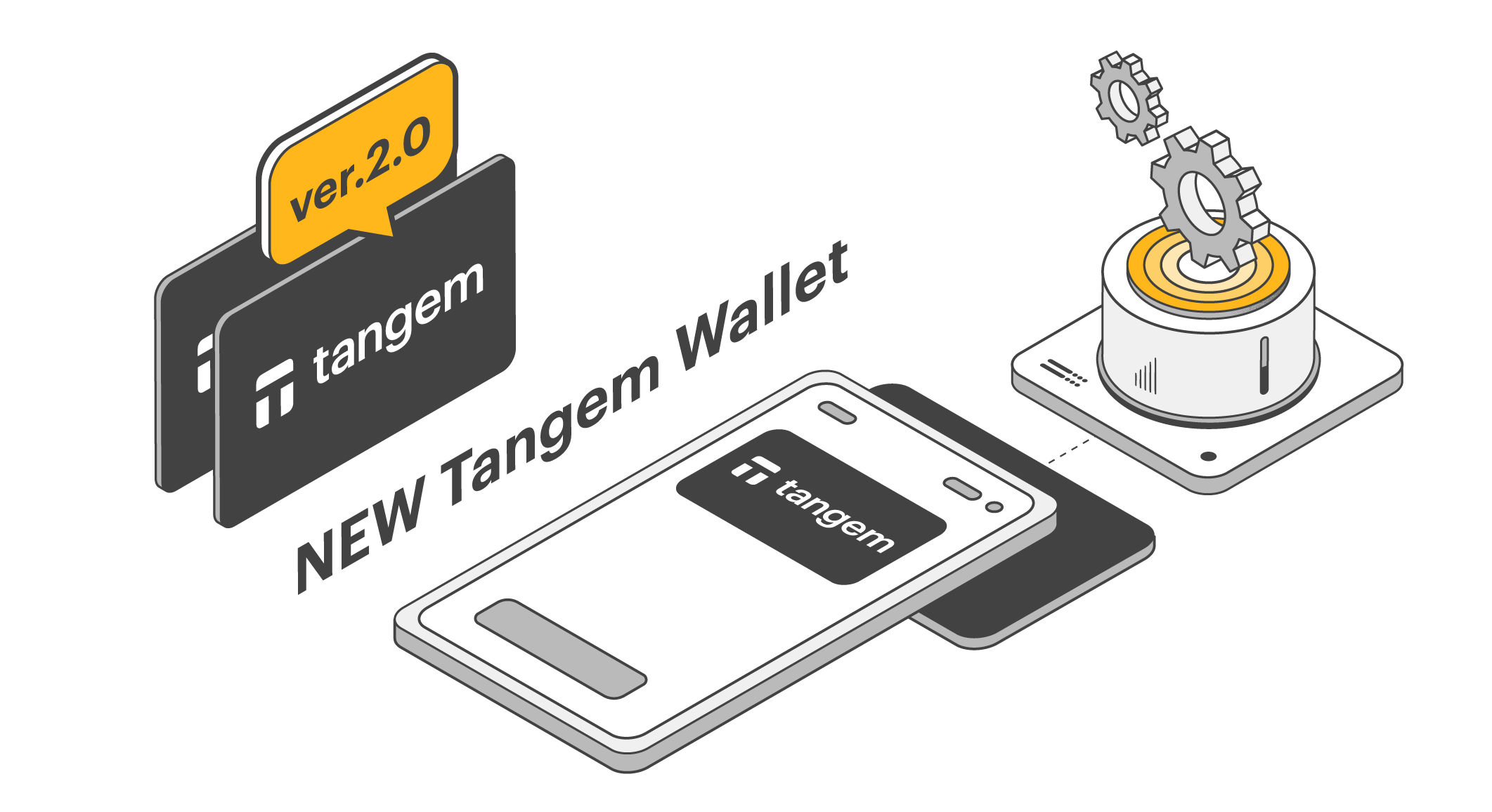
What is a Tangem card, really?
At the core, a Tangem card is a hardware wallet embedded in a smartcard form factor. It contains a secure element chip that holds a private key and performs cryptographic operations. You use a companion app to request signatures over NFC. The design goal is to remove jargon and barriers—no seed phrase memorization, no cable. For many people that means fewer mistakes.
The Tangem ecosystem includes the Tangem Wallet app and a family of cards with different features. Some cards are single-use or single-key, others are multi-asset and designed for repeated everyday use. The company iterates quickly, so check the current product spec before buying. If you’re curious, the official tangem page explains their products and workflows well: tangem.
Security tradeoffs — short version
Here’s the tradeoff in plain language: you get strong hardware protection for keys, but you change how recovery and threat models work. That’s not inherently worse—just different. If someone lifts your physical card, depending on your setup they might be able to transact. Many users add a PIN or require the Tangem app confirmation for higher-risk actions, which helps. Still, physical custody means you need to think like someone who carries cash or a passport.
One more nuance: because Tangem avoids exposing the seed phrase, it reduces the risk of people storing their seed in insecure places (photos, cloud notes, sticky notes). But it also removes the familiar “write it down and store copies” mental model. For folks who like redundancy, Tangem supports approaches like issuing multiple cards for the same wallet (check your card’s model and the app flow), or using custodial backups if you accept that model. Read the docs carefully—really.
Real-world use cases where the card shines
Think about day-to-day crypto use: paying at a decentralized marketplace, signing a quick swap on a mobile DEX, or holding a small allocation of assets without carrying a full hardware kit. The Tangem card’s low friction is great for these. For hardware wallet veterans it’s a fast second wallet. For newcomers it’s a gentler onboarding path.
For example, I carried one during a conference trip last year. No cables. No luggage space taken. Tapped my phone to sign. People asked where I bought it. It made interacting with Web3 less awkward. But when I needed to move large holdings or set up a complex multisig, I still reached for a more traditional device and a seed-based backup plan. Different tools for different jobs—simple as that.
Common pitfalls and how to avoid them
Here are the pitfalls I see often. First: assuming “no seed phrase” means “no backup needed.” Wrong. You still need a recovery strategy. Second: treating the card like an indestructible object. It’s durable, but not invincible. Third: mixing up models and features—some Tangem cards have different capabilities and, crucially, different backup options.
So what should you do? Read the specific card documentation. Register and test with a small amount first. Make a plan for loss, theft, or damage. Consider using multiple cards for redundancy or pairing a Tangem card with an alternative cold-storage method for larger balances.
Setup and daily workflow (high-level)
Setup tends to be straightforward: install the Tangem Wallet app, tap the card, set a PIN if offered, and transfer a test amount. The app will guide you. Transactions are approved via NFC interactions—you initiate a tx on your phone and confirm the signature with the card. That moment of tapping is oddly satisfying.
Everyday workflow is around checking balances, receiving, and sending. If you’re an advanced user, you can integrate with supported wallets or services for added functionality, but stick to verified apps. If you’re not sure which integrations are safe, don’t guess—look for community reviews and official channels.
FAQ
Do Tangem cards require a seed phrase?
Not in the traditional sense. Many Tangem products avoid exposing a human-readable seed phrase, relying instead on the secure element to keep keys safe. That removes a common user error vector but does require a different recovery approach. Check your card model for supported backup options.
Can I use Tangem with my favorite mobile wallet?
Some wallets and dApps support Tangem via mobile integrations, but compatibility varies. Use official integrations and community-vetted tools. If you need a specific wallet to work with your card, verify compatibility before you buy.
What happens if I lose my Tangem card?
If you lose it, the outcome depends on your setup. If there’s a PIN or additional app confirmations, that helps. If you had no backup, recovery may be difficult or impossible. For that reason, plan for loss—consider multiple cards or separate cold backups for critical funds.
I’ll be honest: a Tangem card isn’t the perfect solution for everyone. It’s one of the most user-friendly hardware options out there, and for a large class of users it reduces the friction that causes mistakes. But if you hold very large sums, like institutional sizes, or want advanced on-chain control like multisig with bespoke policies, you’ll likely combine it with other tools. On one hand it’s delightful; on the other, it’s just a component in a broader security strategy.
Final thought: if you want a card-first experience, do the homework. Test it with small amounts. Understand the recovery model. Treat the card as a real piece of identity and value—because that’s exactly what it is. Something felt off in the early days of many products I’ve used, then the teams iterated. Tangem is maturing fast, and if you like practical simplicity, it’s worth a look.